Main Types of Real Estate Property
So, you’re looking for a property to buy, right? Whether it’s for personal reasons or for business, knowing what you’re getting your hands into is going to help you make better decisions.
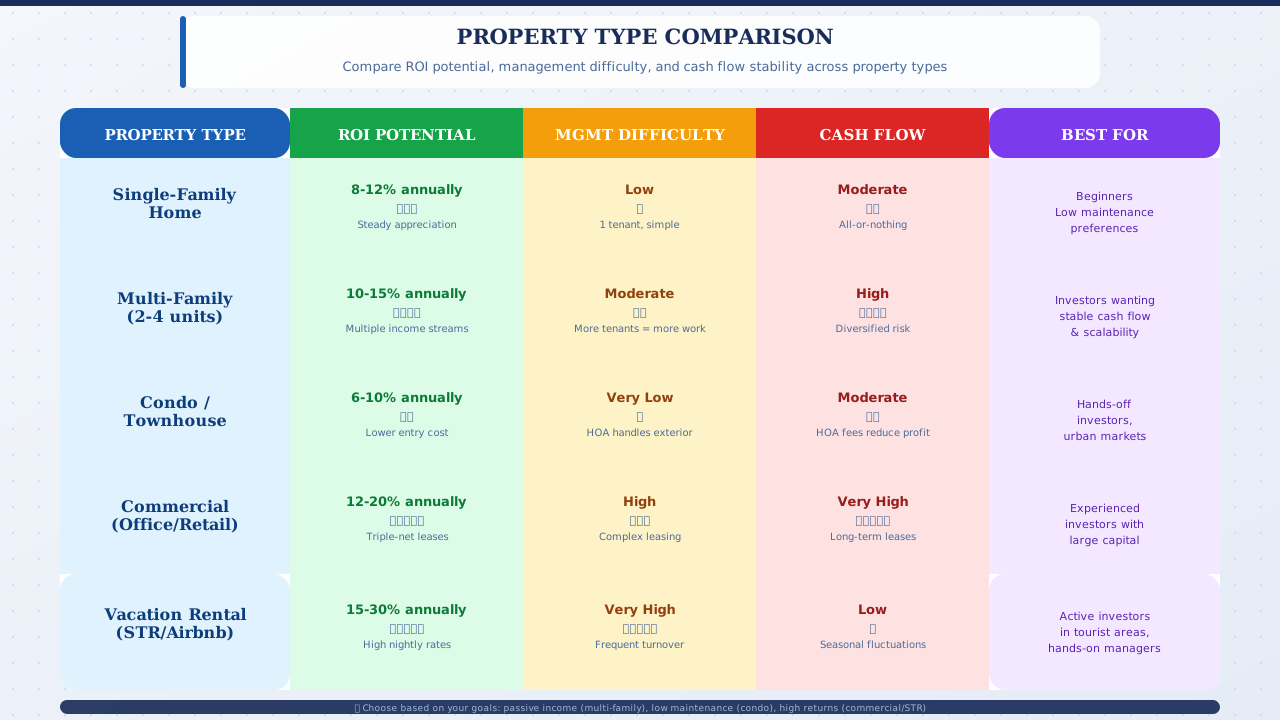
To help you easily understand the topic, we’ve listed the three main types of properties based on what we think is the best choice for anyone looking to enter real estate property investing.
1. Single-Family Homes
Single-family homes are regular homes perfect for one family to live in. Although many home investors may see single-family homes as harder to scale as an investment, on the good side, single-family homes actually get you a better ROI. They’re also much less of a headache to manage and represent a more stable investment.
Let’s get to why that is the case…
The reality is, for many property investors, the goal of being financially free doesn’t actually mean acquiring more property than what they can manage. For many of them, six to seven properties bringing in $900 in passive income every month would be enough to say that they’re financially free.
How Is a Single-Family Home Much Less of a Headache to Manage?
Let’s compare it to an apartment complex. The fact is that tenants in an apartment complex are actually more demanding than those in single-family homes. They expect 24/7 onsite staffing to fix any problems that arise, but in a single-family home, tenants are less likely to be demanding and can wait for a property management company to take care of the problems.
Many apartment complex owners can relate to this situation. So much so that a tenant will actually call you at two in the morning wanting you to come down to their place and have something fixed.
Why Is a Single-Family Home a Much More Stable Investment?
For one main reason: tenants in a single-family home actually stay longer than others. On average, tenants in single-family homes stay for 3–5 years, as opposed to apartments that have an average vacancy rate of 20% where tenants literally come and go.
In addition, tenants coming and going will just make your maintenance budget more costly — having to repaint, redo the carpet, make updates, fixes, and more. Imagine doing that year after year. Wouldn’t it be wiser to just get a single-family home where tenants stay longer?
2. Duplex
A duplex is a home with two separate units. Each unit has its own kitchen, bathroom, and living spaces. It may have two doors or one.
One main thing to note when looking for a duplex is to try to find one in a good neighborhood. This will make it easier to find a tenant. And when looking for tenants, try to find the best tenants you can. A good tenant will either make or break your property investment experience. So, if necessary, try to run a background check to really make sure that you pick the best tenant possible.
Why Are Duplexes a Good Investment to Start With?
That’s because buying a duplex doesn’t require you to pay a high down payment. If you’re willing to live on one side of the duplex, you may only have to pay as low as 3.5% down to buy it, and then you can rent out the other side to someone else — which oftentimes covers the rent that you have to pay yourself, allowing you to live rent-free.
However, if you decide not to live on one side of the duplex and just want both sides to be rented out, the downside is that you’d need to put 25% down on the duplex, which is a much bigger investment compared to 3.5%. Learn more about mortgage loan options for first-time homebuyers.
3. Condo
A condo is a one-door home within a building that contains multiple homes. But is it a good buy and a good investment?
The following are the pros and cons of having a condo as a rental investment property:
Pros:
- There are limited problems in having a condo as a property compared to a house. Generally speaking, when something goes wrong in a condo, it usually costs the owner a lot less money to fix things than if something were to go wrong in a house.
- Cheaper to purchase. Because condos are usually smaller than a house, it’s obvious that they’re going to cost you less.
- Cheaper to rent compared to houses in the same area.
- Great location at a reasonable price.
- Maintenance is easier. Condo buildings usually have maintenance staff you can call when something in your condo requires fixing.
Cons:
- Association fees. The more amenities your condo has, the more you have to pay every month.
- Rental restrictions. While there are cases where you can rent out your condo to other people to bring in extra passive income, a lot of associations actually restrict this. Why? Because they’re looking out for the best interest of other people who also own a unit in the building.
Do You Really Need a Real Estate Agent to Sell Your Properties?
It’s absolutely not necessary to get one, but if you want to get your home to sell fast, then getting an agent might be your best option. Besides, having a good real estate agent will help you price your property appropriately to get the most money out of it.
Keep in mind that real estate agent fees will cost you about 6% of the total price value of the home you’re selling. To learn more about the differences, check out our post on what realtors and brokers do.