Real Estate Agent vs. Realtor vs. Broker: What’s the Difference?
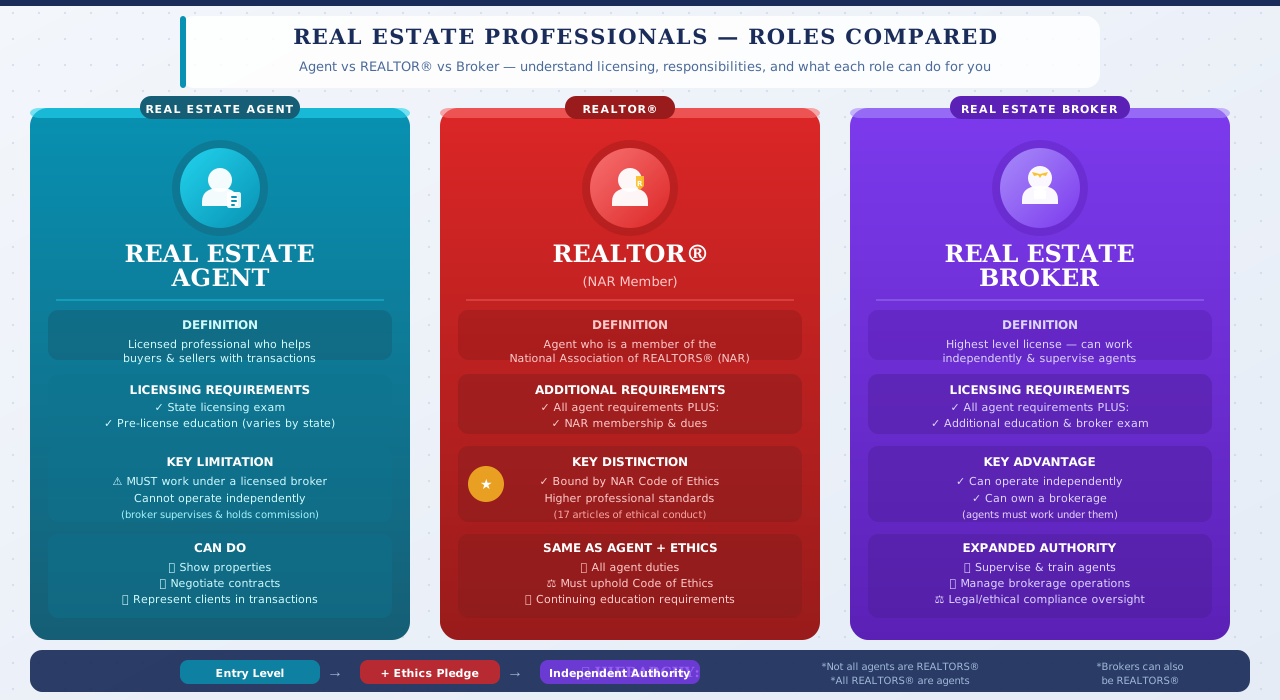
Real estate agents are professionals who facilitate the buying and selling of houses for their clients in exchange for a commission. In short, real estate agents are salespeople. Realtors, on the other hand, are still real estate agents — the only difference is that they’re members of the National Association of Realtors (NAR). Being a member of NAR is what gives them the title of “Realtor.” Lastly, real estate brokers are real estate agents who are licensed to open up a real estate brokerage firm.
Keep in mind that agents, realtors, and brokers are all salespeople. It’s just the flexibility to do business and perform certain activities that differentiates them from each other.
Can Someone Be an Agent, a Realtor, and a Broker at the Same Time?
Yes. If you’re an agent who takes the necessary steps to join NAR, you become a realtor. If you then complete additional education and pass the broker licensing exam, you become a broker. So yes, someone can hold all three titles simultaneously.
What Do Real Estate Agents Do?
- Finding clients who want to sell or buy a house
- Setting up appointments
- Arranging meetings with clients
- Giving property advice
- Lead follow-ups
- Property research in local areas
- Running comparables
- Running marketing campaigns
- Business-related phone calls
- Door knocking when prospecting
How to Become a Real Estate Agent
Step 1: Take a Pre-License Course and Licensing Test
The pre-license course usually takes about 48–60 hours and can be done in person or online. It’s broken into units, each with quiz questions at the end. After completing the course, take a practice exam, then the actual state licensing exam at your local testing center.
Step 2: Apply with Your State’s Real Estate Commission
Submit your personal identification, evidence that you passed your exam, and (in some states) a signed application from your sponsoring broker. You can expect to receive your license within one to two weeks.
Step 3: Pick a Broker to Work Under
Look for a broker that has a supportive team and mentors, a fair commission split, excellent leadership, marketing training, and a high success rate of agents.
Cons of Being a Real Estate Agent
- The failure rate is incredibly high — approximately 90% of agents don’t make it within the first 3–5 years.
- The classes you take to get your license don’t teach you most real-life selling scenarios.
- You don’t get paid unless you close a deal.
- It can be very hard to get clients.
For more details on how realtors and brokers operate differently, read our separate post on what realtors and real estate brokers do. And if you’re an investor looking to build a team, understanding the role of lead managers and acquisitions managers is equally important.