What Is a Cash-Out Refinance?
A cash-out refinance is when you take your property to a bank and use it as collateral to get a refinance loan. This is done by turning your home’s equity (at least 20%) that you’ve been building up over the years into real cash to use however you see fit.
How Much Can You Refinance Your Home For?
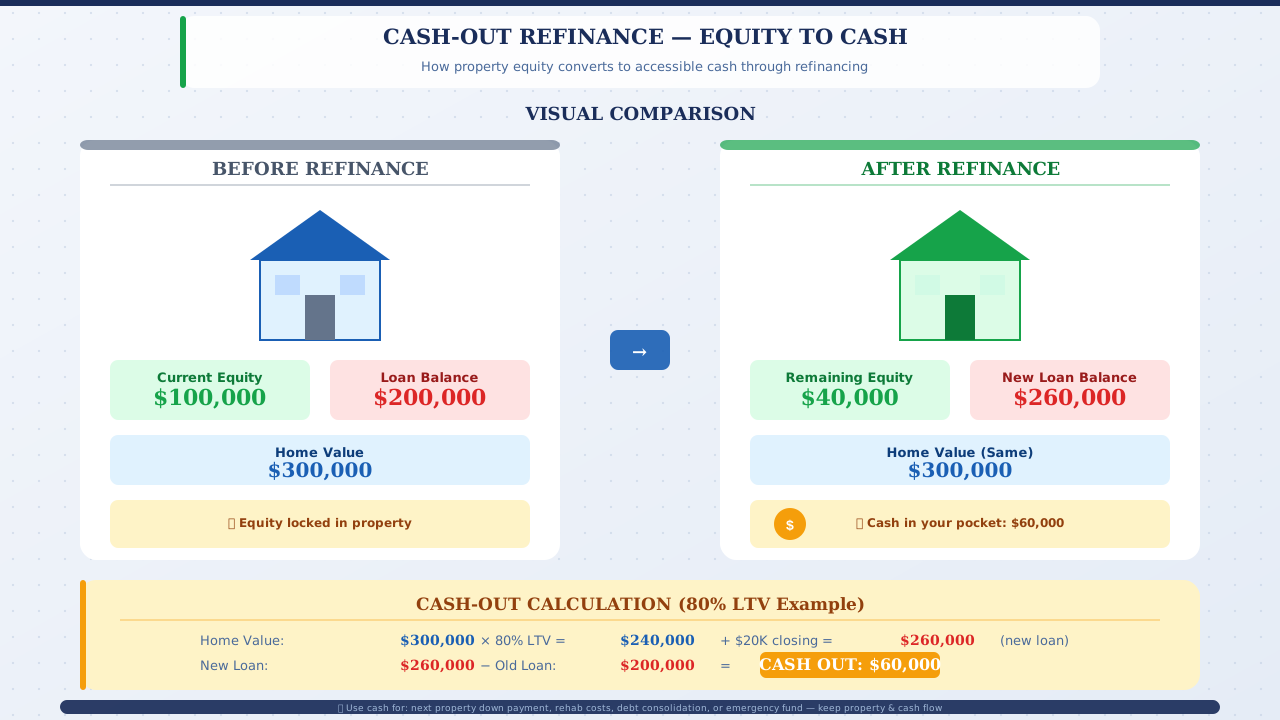
The bank will usually approve you for an 80% refinance loan out of the total value of your home. However, if you still have a remaining balance on your mortgage, they will deduct it from that 80%, and what you’re left with is what’s called the “cash-out money.”
For example, if you have a property valued at $500,000 and a mortgage balance of $300,000, you may be eligible for a cash-out refinance loan of up to $400,000 (80% of $500,000). This would give you a lump sum of $100,000 ($400,000 – $300,000).
Note that you need to have at least 20% equity in your property to be approved. Also, this can differ depending on which state you live in and which bank you use.
How to Know the Actual Value of Your Property
The bank will hire a third-party appraiser to determine the market value of your property. To ensure your property gets the right appraisal value, keep a record of all the work that’s been done on the property, including how much money you put into it and comparable sales in the market.
What Can You Do with Cash-Out Refinance Money?
You can use it to pay off debt, or you can get an investor loan to buy a rental property and use that cash as a down payment. Turning your home’s equity into real cash and leveraging it to start a real estate business — that’s the power of refinancing.
Things You Can Use a Cash-Out Refinance For:
- Access more capital to put into rental properties
- Pay off consumer debt (debt consolidation)
- Increase the value of your primary home through renovations
- Lower your interest rate
How Can a Cash-Out Refinance Lower Your Interest Rate?
A cash-out refinance can lower your mortgage interest if you do it at a time when market interest rates have gone down. Your old mortgage interest rate will be replaced with a new one that has lower rates. But this also means you’ll be starting your mortgage payment timeline over from the beginning because you’ve turned your home’s equity into cash.
What’s the Downside of Cash-Out Refinance?
Because a cash-out refinance is a replacement loan for your old mortgage in exchange for potentially lower interest and a lump sum of cash, it means that instead of getting closer to paying off your mortgage, you’ve just restarted the loan terms.
But hey, you’ve got big cash now and lower interest. Maybe use that to run the BRRRR method? Wouldn’t that be nice?
Can You Refinance a Rental Property?
Yes — as long as you have sufficient equity, a good credit score, and a qualifying DSCR (Debt Service Coverage Ratio). Your DSCR is the amount of income or cash flow that the property brings in through rent that covers the debt. The bank will look at your property’s DSCR to determine the maximum loan amount you can get.
Fees and Payments for a Cash-Out Refinance
- Closing Cost: Typically around 2–3%, though some banks may charge up to 5%.
- Interest Rate: Can range from 4–5%. Investment properties may have higher rates than primary residences.
If you don’t have out-of-pocket money to pay for closing costs, they can be bundled into the total loan amount. And you don’t always have to refinance with your current lender — it’s okay to shop around. For a complete overview of all your options, read our guide on the types of refinance in real estate.
To keep your finances organized through the refinance process, make sure you’re working with a qualified bookkeeper.