So What Exactly Is Seller Financing?
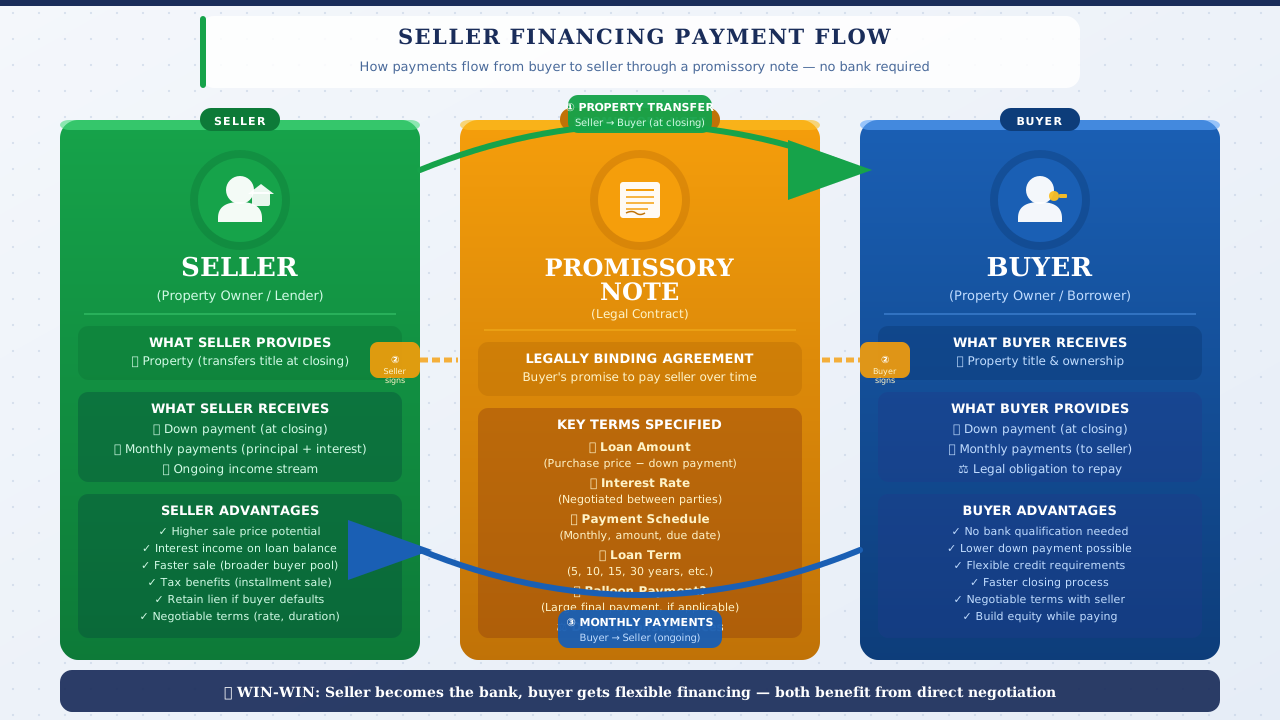
Seller financing — also called owner financing — is when the person selling the property acts as the bank. Instead of the buyer going to a mortgage lender and jumping through all those hoops, the seller agrees to let the buyer make payments directly to them over time.
That’s it. No bank in the middle. No mortgage underwriter giving you grief about your credit score. Just two people agreeing on a price, a down payment, an interest rate, and a payment schedule.
Now before you think this sounds too good to be true, let me be clear — there’s still a legal contract involved. A promissory note and often a deed of trust or mortgage document. This isn’t a handshake deal. It’s a legitimate real estate transaction, just structured differently.
How Does Seller Financing Actually Work Step by Step?
Here’s how a typical seller-financed deal plays out:
- Buyer and seller agree on a purchase price. Just like any other deal. You negotiate, you agree, you move forward.
- They agree on the terms. This includes the down payment (usually 10-20%), the interest rate (often higher than bank rates — think 6-10%), and the loan term (commonly 5-30 years).
- A promissory note is created. This is the legal document that says “I owe you this much, and I’ll pay it back like this.” It protects both sides.
- The deed transfers to the buyer. Yes, the buyer gets the deed. But the seller holds a lien on the property until the note is paid off — just like a bank would.
- The buyer makes monthly payments to the seller. Usually through a loan servicing company to keep things clean and professional.
Some deals include a balloon payment — meaning after a set number of years (say 5 years), the remaining balance is due in full. This gives the buyer time to improve their credit or financial situation and then refinance into a traditional mortgage.
Why Would a Seller Agree to This?
Good question. Here’s the thing — sellers aren’t doing this out of charity. There are real benefits for them:
- Monthly cash flow. Instead of getting one lump sum and paying a massive capital gains tax, the seller gets steady monthly income with interest. That interest is often higher than what they’d earn parking that money in a savings account.
- Tax advantages. Spreading the sale over multiple years through an installment sale can reduce the tax burden significantly. Talk to your CPA about this one.
- Faster sale. Properties that sit on the market for months can move quickly when seller financing is offered because it opens the door to more buyers.
- Higher sale price. Sellers who offer financing can often command a higher price because they’re providing a valuable service — easy access to the property without bank qualification.
Why Would a Buyer Want Seller Financing?
From the buyer’s side, the reasons are just as compelling:
- No bank qualification needed. If your credit isn’t great, or you’re self-employed and have trouble showing “traditional” income, seller financing can get you into a property that a bank would never approve.
- Faster closing. Without bank appraisals, underwriting, and all that back-and-forth, deals can close in a week or two instead of 30-60 days.
- Flexible terms. Everything is negotiable. Down payment, interest rate, payment schedule — it’s whatever the buyer and seller agree to.
- Lower closing costs. No loan origination fees, no bank processing fees, and often no appraisal required.
This is especially attractive for real estate investors who are buying multiple properties. When you’ve already got a few mortgages on your record, banks start getting nervous. Seller financing lets you keep growing your portfolio without hitting that wall. If you’re just getting started, check out our guide on how to find and buy your first rental property.
How Is Seller Financing Different From a Hard Money Loan or Private Money Loan?
People mix these up all the time, so let’s clear it up.
A hard money loan comes from a company or individual that specifically lends money for real estate deals — usually short-term, high-interest loans meant for flips or quick projects.
A private money loan is similar but usually comes from someone you know — a friend, family member, or personal contact who lends you money for a deal.
Seller financing is different because the money isn’t coming from a third party. The seller IS the lender. They’re not lending you cash — they’re letting you pay for the property over time directly to them.
What Are the Risks of Seller Financing?
Nothing in real estate is risk-free, and seller financing is no exception.
Risks for the Buyer
- Higher interest rates. You’ll almost always pay more in interest than you would with a conventional mortgage.
- Balloon payment pressure. If you can’t refinance when the balloon is due, you could lose the property.
- Due-on-sale clause. If the seller still has a mortgage on the property, their lender could call the loan due when they find out the property was sold. This is a real risk that needs to be addressed upfront.
Risks for the Seller
- Buyer default. If the buyer stops paying, the seller has to go through foreclosure to get the property back — which costs time and money.
- Property damage. If the buyer trashes the property, the seller might end up with a damaged asset.
- Opportunity cost. The money is tied up in the deal instead of being available for other investments.
When Does Seller Financing Make the Most Sense?
Seller financing works best in specific situations:
- The seller owns the property free and clear (no existing mortgage)
- The buyer has money for a down payment but can’t qualify for traditional financing
- The property has been sitting on the market and the seller needs to move it
- Both parties are willing to negotiate creative terms
- The buyer plans to refinance within a few years — our breakdown of mortgage loan types can help you figure out what to refinance into
Frequently Asked Questions
Is seller financing safe?
Yes, as long as both parties use a real estate attorney to draft the documents. The promissory note and deed of trust protect both sides legally.
What’s a typical down payment for seller financing?
Usually 10-20% of the purchase price, but it’s negotiable. Some sellers accept as little as 5%, while others want 30% or more.
Can I use seller financing to buy rental property?
Absolutely. Many real estate investors use seller financing specifically for rental properties because it lets them acquire more properties faster than going through banks.
Do I need a real estate agent for a seller-financed deal?
Not necessarily, but having a real estate agent or broker can help with negotiations and make sure the deal is structured properly.
Bottom Line
Seller financing is one of the most underused tools in real estate, and honestly, that’s what makes it so powerful. While everyone else is fighting over bank-approved deals, you can be closing creative deals that most people don’t even know exist.
Is it for every deal? No. But when the situation is right, seller financing can be the difference between sitting on the sidelines and actually building your portfolio.